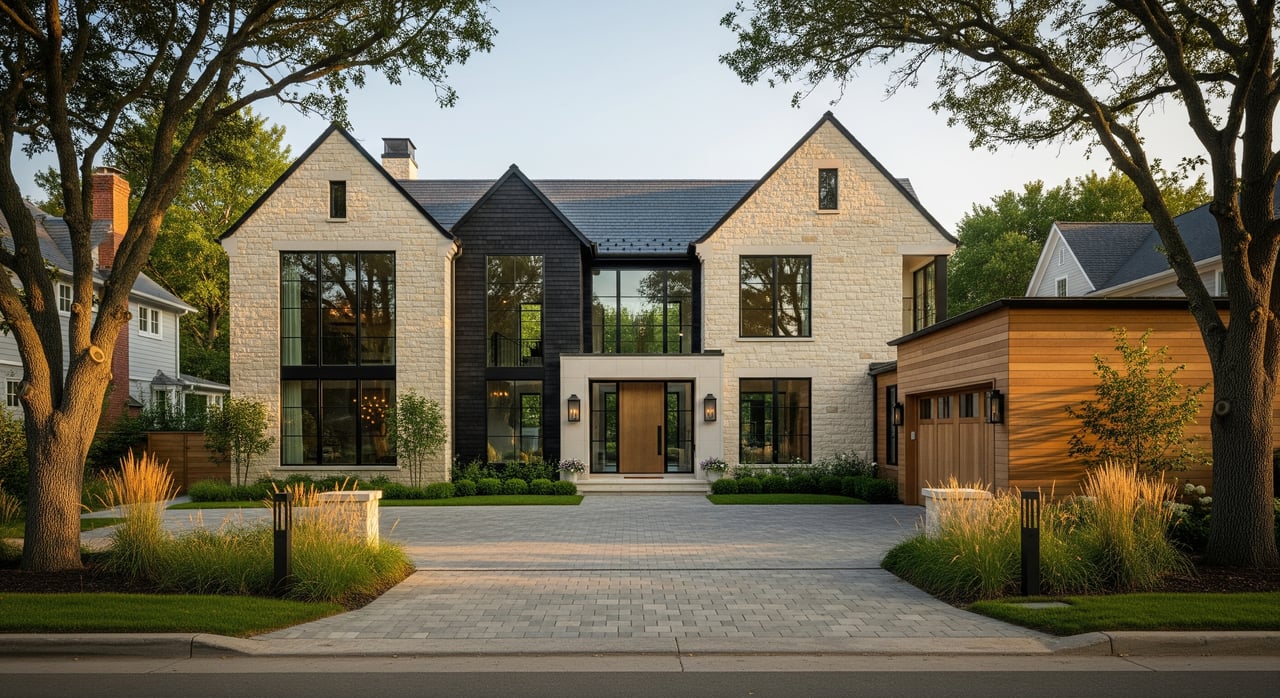
Dreaming of a sleek new build near the Plaza but not sure whether to buy a ready spec home, tweak a semi-custom, or design a full custom from the ground up? You are not alone. Each path offers a different mix of control, timing, and cost, and those tradeoffs can shift around the Plaza and across Platte County. This guide breaks down the options, shares local context, and gives you a simple checklist to move forward with confidence. Let’s dive in.
Spec, semi-custom, and custom: the basics
Spec homes
A spec home is built without a specific buyer in mind. The builder chooses the plan and finishes, completes the home, and lists it for sale. You can sometimes buy during construction and request limited changes, but most personalization happens after closing.
- Control: Low; finishes and layout are largely set.
- Timeline: Often the shortest path to move-in, commonly 4–9 months from start of construction, or faster if already completed.
Semi-custom homes
Semi-custom homes start with a set of builder plans and a menu of options. You choose finishes and may add pre-approved structural tweaks like a different elevation or small bump-outs.
- Control: Moderate; strong influence on finishes and select structural options.
- Timeline: Commonly 6–12 months once construction begins, plus time for selections and procurement.
Full custom homes
A full custom home starts with your lot and your vision. You hire an architect and a builder to design and build a one-of-a-kind home that fits your needs and site.
- Control: Maximum; layout, materials, and systems are your call.
- Timeline: Longest; design, permitting, and construction often span 12–24 months or more.
What changes near the Plaza and in Platte County
Plaza and adjacent Midtown pockets
- Lot type: Urban infill with small, irregular lots, mature trees, and older infrastructure.
- Common approach: Teardowns and infill builds, often semi-custom or full custom due to lot constraints.
- Considerations: Possible historic or design review, utility upgrades, and longer permitting timelines.
West Plaza and nearby neighborhoods
- Lot type: Transitional urban/suburban with some infill opportunities and small-lot redevelopment.
- Common approach: Mix of semi-custom infill builders and developer-built townhomes or duplexes.
- Considerations: Administrative reviews or hearings may add weeks or months to permits.
Prairie Village
- Lot type: Established suburban blocks with mature neighborhoods and replacement builds.
- Common approach: Many semi-custom and custom teardowns aligned with neighborhood character.
- Considerations: Zoning, setbacks, and neighborhood covenants may guide rooflines, materials, and home size.
Platte County/Northland pockets
- Lot type: Newer subdivisions and greenfield lots with more land choices.
- Common approach: Production/spec and semi-custom builds at scale; full custom is also feasible.
- Considerations: Modern infrastructure and clearer timelines, though impact fees or stormwater requirements may apply.
Timelines at a glance
| Build type | Typical build time | What can add time around the Plaza |
|---|---|---|
| Spec | 4–9 months from start, or immediate if completed | Infill permitting, utility upgrades, and tight-site logistics |
| Semi-custom | 6–12 months once construction begins | Selection lead times, approvals for limited structural options |
| Full custom | 12–24+ months including design and permits | Historic/design review, complex sites, specialty systems |
Note: Urban infill projects near the Plaza can add several months for permitting and neighborhood review compared with greenfield suburban lots.
Budget and contract basics
- Ask for a clear, line-item estimate. Separate land, site work, foundation, shell, finishes, and allowances. Know what counts as an upgrade.
- Plan a contingency. Consider 5–10 percent for spec and semi-custom, and 10–15 percent or more for full custom.
- Choose your contract type carefully. Fixed-price contracts can improve cost certainty if the scope is well-defined. Cost-plus contracts offer transparency but shift price risk to you. Some builders offer guaranteed maximum price models.
- Clarify allowances and deadlines. Kitchen counters, lighting, and flooring often have allowance ranges and firm selection dates.
Financing: how each path is funded
- Buying a completed spec home. This often looks like a standard purchase with a new-home warranty and immediate closing timeline.
- Buying a spec home mid-build. Ask your lender about funding a home that is not yet complete. Pre-approval should match this scenario.
- Semi-custom and full custom. Construction or construction-to-permanent loans disburse funds in draws during the build, then convert to a mortgage at completion.
- Lot strategy. You may purchase the lot first, finance it, or have a builder hold it. Each choice affects down payment requirements and loan structure.
- Upgrades and change orders. Lenders typically finance the contract amount. Be ready with cash or lender approval for changes made after financing is set.
How to choose your builder
- Review experience and portfolio. Visit model homes and recent projects that match your scale and style.
- Verify licensing and insurance. Confirm contractor credentials and worker’s comp coverage as required by the municipality.
- Call references. Ask recent clients about workmanship, schedule adherence, and how change orders were handled.
- Understand the subcontractor model. Learn how the builder schedules trades and manages backlogs.
- Get the warranty in writing. Typical models include 1-year workmanship, around 2-year mechanical coverage, and longer structural coverage that can be about 10 years, but practices vary.
- Demand contract clarity. Scope, allowances, selection deadlines, pricing for common upgrades, and dispute resolution should be explicit.
Design and selection workflow
- Start with the big decisions. Plan selection, lot orientation, and any allowed structural options.
- Follow a written selections timeline. Expect deadlines for cabinets, counters, flooring, tile, and fixture packages that tie to ordering windows.
- Manage change orders. Agree on how changes are priced, approved in writing, and paid.
Resale and neighborhood fit
- Scale and massing. Homes that are much larger or more modern than neighbors can face appraisal or resale challenges.
- Exterior materials. Aligning with neighborhood character often helps with approvals and long-term value, especially where covenants or design review apply.
- Price alignment. Compare your plan and finish level to recent sales and active listings. New-build premiums depend on location and finishes.
Quick buyer checklist
- Choose your build path: spec for speed, semi-custom for balanced control, full custom for maximum personalization.
- Confirm timeline fit: 4–9 months for spec, 6–12 months for semi-custom, 12–24+ months for full custom, with extra time possible near the Plaza.
- Get financing aligned: know your loan type, lot strategy, draw schedule, and how upgrades are handled.
- Lock your selections: understand allowance ranges and ordering deadlines to avoid delays.
- Vet your builder: portfolio, references, contract type, warranty, and change-order policy.
- Plan for site realities: infill lots may need utility upgrades, tree protection, stormwater measures, or sewer lateral work.
Where to verify details
- Kansas City, MO Planning and Development and Building Inspection for permits, infill guidance, and any historic or design review overlays near the Plaza.
- Prairie Village, KS Planning and Building for suburban permitting, setbacks, and common covenant practices.
- Platte County and Parkville planning and building departments for Northland subdivision and greenfield build rules.
- Greater Kansas City Home Builders Association for builder lists and local construction norms.
- Regional MLS and KC Realtors market reports for recent new-build sales and pricing context.
- County assessor and tax offices for property tax and valuation history.
Who to interview locally
- A production builder active in suburban Northland communities for spec and semi-custom insights.
- A custom infill builder who works around the Plaza for design review and tight-lot strategies.
- A local lender experienced with construction and construction-to-permanent loans in the Kansas City metro.
Final thoughts
If you want the fastest path and a clear price, a spec home near the Plaza or in a Platte County subdivision may be ideal. If you want design influence without the full architectural process, a semi-custom build offers balance. If your site or vision calls for something unique, a full custom is the right path, with more time and planning.
You do not have to navigate this alone. For tailored guidance, introductions to reputable local builders and lenders, and a clear game plan around the Plaza and in the Northland, reach out to Candi Sweeney. We are here to help you match your design goals to the right timeline and budget.
FAQs
What is the main difference between spec and semi-custom near the Plaza?
- Spec homes are predesigned and built for the market with limited buyer input, while semi-custom lets you choose finishes and select structural options from a builder’s plan set.
How long does a full custom build usually take in the Kansas City metro?
- Plan for 12–24 months or more from design through permitting and construction, with urban infill and design reviews potentially adding time.
Are permitting timelines different in Platte County compared to the Plaza area?
- Yes. Greenfield lots in Platte County often have clearer paths, while Plaza-area infill can add weeks or months due to reviews, older infrastructure, and site constraints.
How much contingency should I budget for a new build?
- Consider 5–10 percent for spec and semi-custom projects and 10–15 percent or more for full custom to cover surprises and upgrades.
Do builders provide warranties on new construction?
- Many offer a workmanship warranty around 1 year, mechanical coverage often about 2 years, and longer structural coverage that can be about 10 years, though terms vary by builder and location.