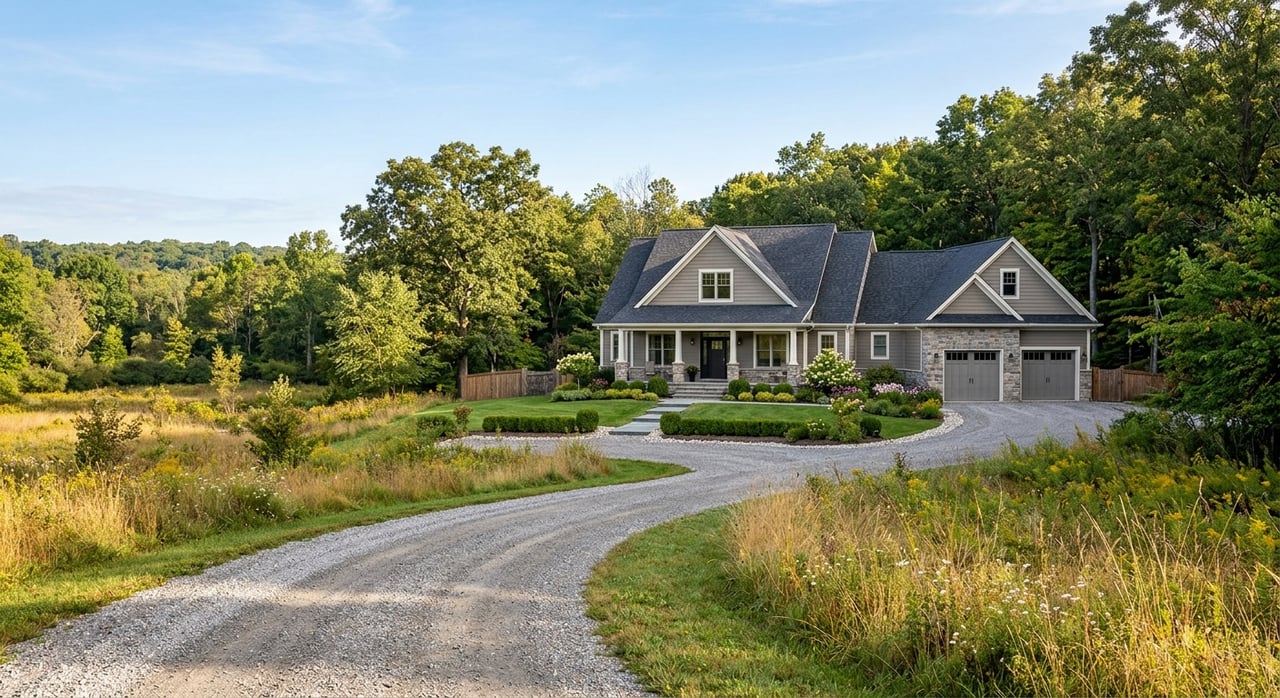
If you are dreaming about more space, more privacy, and room to build the lifestyle you want, buying acreage near Kansas City can feel like a smart next move. But with land, the details matter just as much as the view. Before you buy, it helps to understand how zoning, access, utilities, and approvals can shape what you can actually do with a property. Let’s dive in.
Start With Jurisdiction First
One of the biggest mistakes acreage buyers make is assuming land is simple. In reality, the same property can be governed by Kansas City, another municipality, or unincorporated Jackson County, and that changes who handles zoning, permits, floodplain review, code enforcement, and subdivision approvals.
Jackson County specifically advises buyers to contact its Development Division before purchasing land or planning development. That step can help you avoid surprises early, especially if you are thinking about building, improving access, or dividing the property later.
Check Zoning Before You Fall in Love
Zoning tells you what uses may be allowed and how development may be limited. In Kansas City, zoning is governed by Chapter 88 and the city planning code, and each zoning district has its own rules for uses, building size, height, and placement.
If the property is inside Kansas City limits, the city’s development guide includes information on districts such as AG-R Agricultural-Residential. In unincorporated Jackson County, land-use districts include AG, RE, RR, RS, and RU, among others, and the county’s zoning and subdivision applications page shows how many different approvals may come into play.
Know If You May Need Platting
If you hope to split acreage, create additional lots, or plan future development, platting should be part of your early due diligence. Kansas City notes that final plats legally create buildable lots, and Jackson County states that plats must be approved by the proper planning department before recording.
That means a large parcel is not automatically ready for multiple homes or future lot sales. If flexibility matters to you, verify that process before you close.
Treat Access as More Than a Driveway
Road access can affect cost, timing, and even whether your plans are workable. It is not enough for a parcel to simply touch a road. You need to know who controls that road and what approvals may be required.
Jackson County Public Works handles roads, bridges, sewers, signs, and code enforcement in unincorporated areas, while MoDOT oversees work in its right of way. If your land fronts a state road, that can trigger extra steps.
Frontage Can Change the Process
MoDOT requires permits for driveway construction and modifications within its right of way. Jackson County’s unincorporated building permit process also states that a MoDOT driveway permit must be in place before a building permit application is accepted when access is from a state road.
MoDOT also notes that some projects may require engineering drawings, drainage analysis, traffic control plans, or traffic studies. For acreage buyers, that can mean added planning if the property sits on a busy corridor or has limited sight distance.
Private Roads Need Extra Attention
If access is by a shared drive or private road, make sure the route is supported by recorded documents and approved arrangements. Jackson County’s plat procedures explain how recorded plats update parcel records, which makes those records an important part of your review.
This is one reason a survey, title review, and local planning check can work together. You want to confirm that access is not just visible on the ground, but also properly documented.
Remember the 811 Rule
If you plan to dig for fencing, utility work, grading, or driveway improvements, Missouri law requires a locate request first. The Missouri Public Service Commission says to call 811 before digging and to provide notice at least three working days before excavation.
Evaluate Utilities as a Package
Acreage can offer freedom, but it can also mean more site-specific utility planning. Public water and sewer may be available on one parcel and unavailable just down the road. That is why utilities, septic, wells, and site conditions should be evaluated together.
Do Not Assume Public Water or Sewer
KC Water serves a large area, with a service territory of about 320 square miles, but availability is still parcel-specific. Kansas City’s development guide also explains that water, sanitary sewer, storm sewer, streets, and similar infrastructure are city-owned and maintained, while electric, gas, cable, and telephone service are typically handled by private utilities.
In some city development situations, water and sewer mains may need to extend to and through the property frontage. On larger tracts, that can become a meaningful cost and timeline consideration.
Check Electric and Gas at the Address Level
Utility providers may cover the general area but not every parcel in the same way. Evergy advises customers to confirm their service area through their account or billing information, and Spire notes that its Western Missouri territory includes Jackson County while also recommending address-specific confirmation.
For buyers, the practical takeaway is simple: ask what is available now, where the nearest connections are, and whether service extensions may be needed.
Septic Feasibility Matters
If a property is not served by public sewer, onsite wastewater can become one of the most important parts of your due diligence. Missouri DHSS states that a construction permit is generally required for most onsite wastewater systems, although some single-family lots may be exempt.
DHSS also explains that soil and site limitations, along with available space, are often the most limiting factors. In other words, more land does not always mean easier septic approval. The best approach is to review soil conditions early and work with qualified onsite wastewater professionals.
Wells Have Rules Too
If the parcel will rely on a private well, Missouri DNR regulates well construction and plugging. The state requires permitted drillers for paid work and sets setback distances from contaminant sources such as septic tanks, lagoons, feed lots, and drain fields.
That makes well planning a site-design issue, not just a utility issue. Septic layout, well placement, and the physical features of the land all need to work together.
Watch for Floodplain and Site Constraints
Acreage buyers are often focused on space, but buildable area can matter more than total acreage. If a parcel includes creek frontage, drainageways, or low-lying ground, stream buffers, wetlands, and floodplain considerations may limit where you can build or improve the land.
Kansas City’s development guide discusses stream buffer rules along with floodplain and wetland considerations. Jackson County also has a separate floodplain development application listed on its zoning and subdivision page, which signals how important this issue can be.
Before you make assumptions about a homesite, barn, shop, or future lot split, confirm what parts of the property are actually usable under current rules.
Build the Right Due Diligence Team
Buying acreage near Kansas City usually calls for more than a standard home search checklist. The right team can help you connect the parcel records, zoning rules, utility questions, and physical site conditions before you commit.
Kansas City’s development guide recommends retaining professionals such as architects, landscape architects, registered surveyors, engineers, planners, or other approved professionals for site plans. It also notes that a licensed professional land surveyor is needed for plats, and a professional engineer is needed when public infrastructure is involved.
Use Records Carefully
Jackson County’s Public Property Portal can be helpful for assessment and property-record review, but the county says it is not an official or certified source of legal property documentation. The county also warns that a title search alone may not reveal code violations.
Before closing, Jackson County advises buyers to check property code violations, especially for land in unincorporated areas. Unresolved issues can affect occupancy or create unexpected cleanup costs.
A Smart Acreage Checklist
As you evaluate land, focus on these core questions:
- What jurisdiction governs the property?
- What is the current zoning?
- Is the intended use allowed under current rules?
- Does the parcel need platting or subdivision approval?
- Who controls road access?
- Will a driveway permit be required?
- Are public water and sewer available at the site?
- If not, is septic and well feasibility strong?
- Are there floodplain, stream buffer, or wetland concerns?
- Are there any known code violations or permit issues?
Why Acreage Purchases Need a Different Approach
Buying acreage is rarely just about buying more land. It is about understanding what that land can support today and what it may allow in the future. Zoning, access, utilities, floodplain issues, and approvals can all shape the value and usability of a property.
With the right planning, acreage can offer flexibility, privacy, and long-term potential. If you want a local guide who understands the moving parts behind land and estate-style property searches, Candi Sweeney is here to help you navigate the process with clear communication and hands-on support.
FAQs
What should you check first when buying acreage near Kansas City?
- Start by confirming the governing jurisdiction, current zoning, and whether your intended use matches the property’s allowed uses.
Does acreage in Jackson County automatically mean you can build easily?
- No. Zoning, platting, access, septic feasibility, utility availability, and floodplain constraints can all affect what you can do with the land.
Can you assume acreage near Kansas City has public water and sewer?
- No. Even though KC Water serves a large regional area, utility availability is parcel-specific and some properties may depend on wells or onsite wastewater systems.
Do properties on state roads near Kansas City need driveway permits?
- In many cases, yes. If access is from a state road, MoDOT permits may be required, and additional engineering or drainage review may also apply.
Why do floodplain and stream buffers matter for acreage purchases?
- They can reduce the buildable area of a property and may affect where you can place a home, driveway, or other improvements.
Should you call 811 before digging on acreage in Missouri?
- Yes. Missouri law requires a Missouri 811 locate request at least three working days before excavation.